It's Not the Shape Alone: The Finishing Moves That Make a Haircut Look Intentional

Photo: Mr Ignavy , CC BY-SA 2.0, via Wikimedia Commons
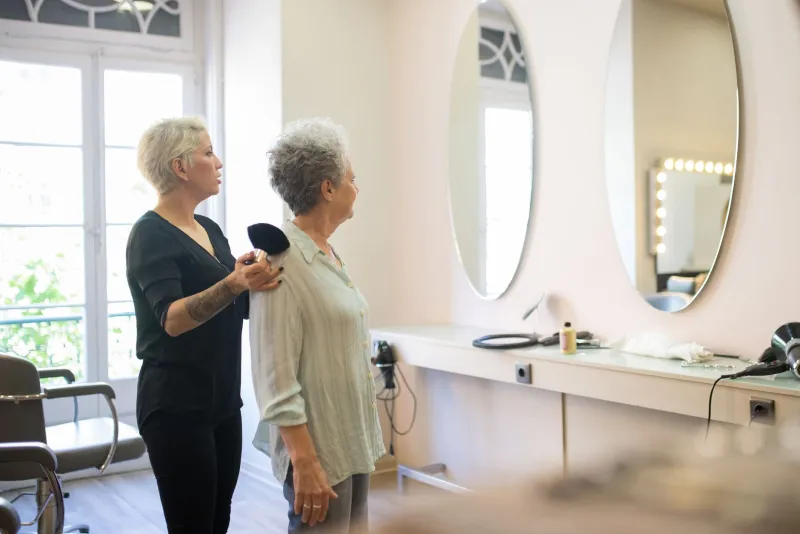
There's a moment near the end of a good appointment when the cut is technically finished but the look isn't yet. Your stylist turns the chair, picks up a hand mirror, and starts making tiny adjustments—lifting a section here, softening a line there, checking how the hair falls when you tilt your head. To anyone watching, it can look like fussing. To a stylist, it's the part that turns a shape into a signature.
Most people describe haircuts in broad terms: a bob, a shag, long layers, a pixie. Those words matter, but they're really just the headline. The details underneath—the finishing moves—are what decide whether the cut feels polished on a Tuesday morning or only looks right under salon lighting. At Naomi & Company Hair Design, we treat that final pass as part of the cut itself, not a bonus step at the end.
The Part Is a Design Decision, Not a Default
Where your hair splits is one of the most visible choices in the whole cut, and it's often the least discussed. A part affects how weight is distributed, how bangs sit, and whether your face-framing pieces fall forward or sweep back. It also has to coexist with cowlicks, growth patterns, and the way you actually dry your hair at home.
Before your stylist starts cutting, talk about your real-life part. Do you wear it the same way every day, or do you move it around? Does it hold without product, or does it collapse by lunch? A good finish starts with a part that can be cut to support the way you wear your hair—not a part that fights your natural pattern.
Ask something like: "Where do you see the part sitting when this is air-dried?" or "If I want to switch sides occasionally, will this cut allow it?" Those questions give your stylist room to place weight intentionally instead of defaulting to the middle or the side out of habit.
Face-Framing Weight: Soft, Strong, or Somewhere In Between
The hair around your face is the part people see first, and it's also the area most likely to be over-cut or under-considered. Too much weight removed and the frame goes limp. Too little and the front starts to feel heavy, especially if you wear glasses, hats, or your hair up often.
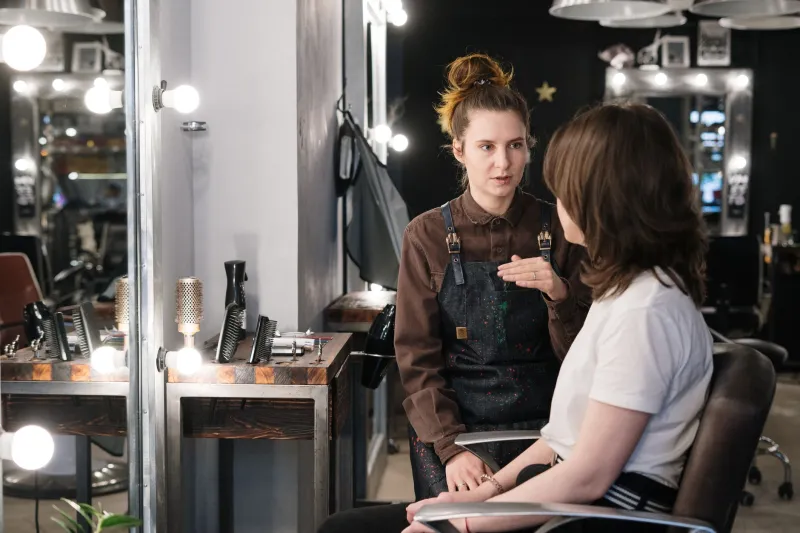
This is where the finishing conversation gets practical. Instead of asking for "face-framing layers" in general, describe what you want them to do. Do you want softness that blends into a ponytail? A stronger line that draws attention to your cheekbones? Something that stays put when you tuck one side behind your ear?
A stylist can adjust the weight in that zone without changing the overall length or shape. That's the beauty of finishing details—they're small changes with an outsized effect. If you've ever left a salon feeling like the cut was almost right but not quite "you," the face-framing weight is often the reason.
The Nape Is Not an Afterthought
The back of your neck doesn't get much mirror time, which is exactly why it deserves a mention. A clean nape line makes short cuts look sharp and long cuts look intentional. A neglected one makes even a good cut feel a little unfinished, especially when you pull your hair up.
For shorter styles, the difference between a tight, hard line and a softer, tapered finish is huge. Neither is wrong—it's about how you want the cut to grow out and how often you're willing to maintain it. For longer hair, a subtle cleanup at the nape can keep the hairline looking tidy without touching the length.
Try saying: "I want the nape clean but not tight—something that won't look blunt in three weeks." That gives your stylist a clear direction and saves you from a grow-out you didn't sign up for.
Texture at the Ends Does the Heavy Lifting
The ends of your hair are where movement lives. A blunt line creates weight and swing. Point-cutting softens. Slide-cutting can make hair feel lighter without removing much length. None of these are better or worse—they just create different finishes.
This is also the area where home styling shows up first. If your ends are cut to look smooth when blow-dried with a round brush but you usually air-dry and go, the finish won't translate. Tell your stylist how you actually dry your hair, and ask what the ends will do without product or heat.
A useful question: "What are the two or three things you're doing at the ends that I'll notice most when I style it myself?" It's specific enough to get a real answer without turning into a lesson.
How to Bring It Up Without Micromanaging
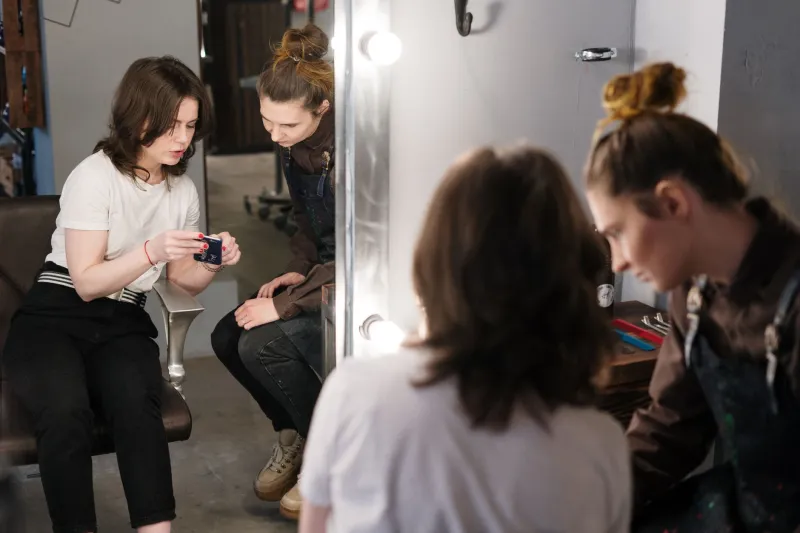
You don't need to know the technical names for every finishing move. You just need to point your stylist toward the details that matter to you. Reference photos can help, but instead of showing a whole haircut, crop in on the part, the face frame, or the ends. That tells your stylist what you're actually responding to.
During the appointment, ask for a hand mirror and check the cut from angles you don't normally see—the back, the side, the way it falls when you tuck it behind your ear. If something feels off, say so before you leave. Finishing adjustments are quick and easy in the chair. They're much harder to fix at home.
And if you love the finish, ask your stylist to note it in your file. Phrases like "soft nape, no hard line" or "face frame kept long enough to tuck" are the kind of shorthand that makes your next appointment feel effortless.
The headline shape gets you in the door. The finish is what makes the cut feel like yours. At Naomi & Company Hair Design, we're happy to spend the last ten minutes on it—because that's where the polish lives.