Your Camera Roll Is a Mood Board, Not a Blueprint
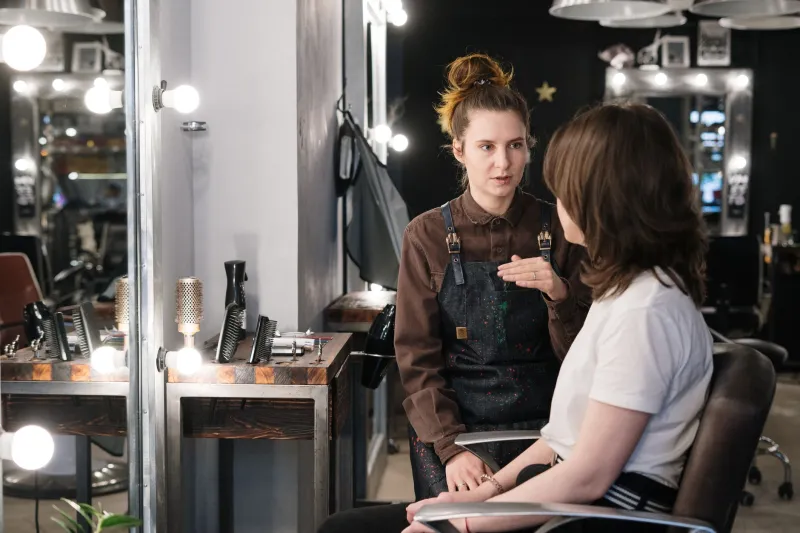
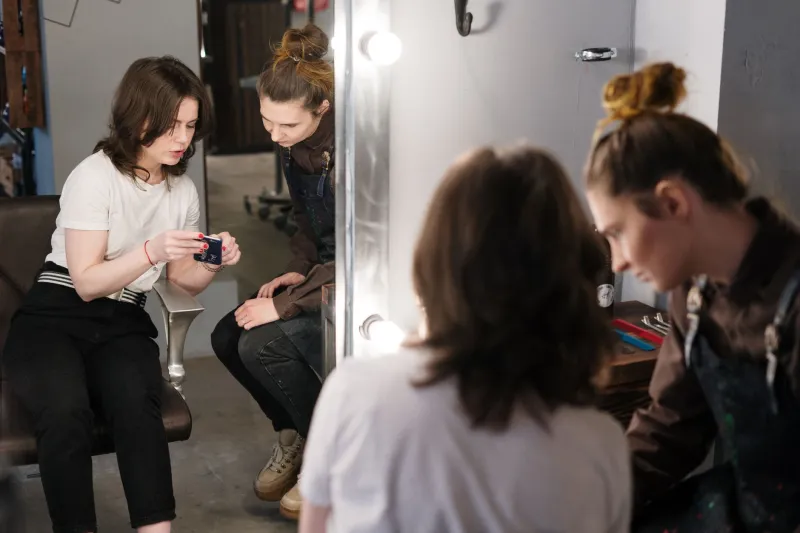
We have all done it. You are scrolling on a Sunday night, you see a cut or a color that stops your thumb, and you save it. Maybe you save three. By the time you sit in the chair, your phone has become the whole conversation. Sometimes that works beautifully. Sometimes you leave with a shape that looked great in the photo and feels like a costume in your own bathroom mirror.
The photo is not the problem. The problem is what we ask the photo to do. A screenshot can start a great conversation about shape, texture, and tone. It cannot make decisions for your hair. At Naomi & Company Hair Design, we like reference photos. We just prefer to treat them as a mood board, not a blueprint.
A Photo Is a Starting Point, Not a Spec Sheet
A reference image captures one moment. It shows a finished result under specific lighting, after specific styling, with specific product. It does not show your hair’s density, your growth pattern, the cowlick at your crown, or how much time you actually want to spend on a Tuesday morning. It also does not show the stylist behind the camera, who likely spent twenty minutes making that shape behave.
That does not make the photo useless. It makes it a beginning. The useful question is not, “Can you make me look exactly like this?” The useful question is, “What is it about this image that I am responding to?”
What Your Screenshot Is Actually Saying
When you save a photo, you are usually reacting to a feeling. The softness of a curtain bang. The swing of a collarbone bob. The warmth of a brunette that catches the light. That feeling is real information. Your stylist can work with it.
But we need to know which part you are responding to. Is it the fringe? The length? The texture? The color? The way the hair moves when the model turns her head? Bring two or three images rather than one, and point at the exact detail. Circle it. Zoom in. Say, “This is the part I love.” That single gesture saves more confusion than a hundred saved screenshots.
The Details Photos Leave Out
Photos are flat. Hair is not. A photo cannot tell us how your hair behaves in humidity, how it dries without product, or whether you are willing to use a round brush every morning. It cannot show us how a color will sit against your skin in daylight versus ring light. It cannot tell us whether you have a wedding in three weeks or a job interview on Monday.
This is why the same photo can produce a great result on one client and a frustrating one on another. The cut is the same, but the hair is not. The routine is not. The life is not. A polished look is always a collaboration between the shape and the person wearing it.
How to Translate Inspiration Into Your Signature Look
Instead of handing over your phone and saying, “This one,” try describing the direction. You might say, “I love the shape here, but I want it to work with my natural texture.” Or, “I am drawn to this color, but I want it two shades softer.” Or, “I want the feeling of this bob, but I need to be able to pull it back for work.”
That is translation. You are borrowing the idea, not the exact cut. Your stylist can then adapt the length, the layers, the fringe, and the tone to fit your hair and your routine. The result should still feel like you—just more polished, more intentional, more like the version of yourself you were trying to show us in the first place.
Questions to Bring to the Chair
A reference photo works best when it comes with a few good questions. These are not challenge questions. They are collaboration questions.
- Which part of this photo do you think will work with my hair, and which part will not?
- What would you change to make this shape fit my growth pattern and density?
- How much styling time does this look require on a normal weekday?
- If I do not want to blow-dry every day, what is the closest version of this?
- How will this cut grow out, and when will I need to come back?
- Can you show me where this color will sit against my skin in daylight?
- What should I ask for if I want the vibe but not the exact length?
These questions do two things. They give your stylist permission to be honest, and they give you a way to stay in charge of your own look. You are not rejecting the photo. You are asking it to earn its place in the conversation.
Color Photos Need a Different Kind of Translation
Color inspiration is even trickier than cut inspiration. Screenshots carry filters, contrast, and lighting that may have nothing to do with your actual hair. A photo of caramel balayage on a model with warm undertones may read differently on you, especially if your hair is darker, finer, or more porous. The placement may look perfect in the picture and too heavy in the mirror.
Instead of asking for the exact shade, ask your colorist to look at the photo for depth and placement. Do you love the brightness around the face? The soft root shadow? The way the color catches the ends? That is the useful information. The exact formula is something your colorist can build for you, not something a screenshot can prescribe.
The Final Check
Before you leave the salon, look at your reference photo one more time. Not to compare every strand, but to ask yourself a simpler question: does this feel like the direction I wanted? Does it feel like me? If the answer is yes, the photo did its job. It started a conversation, and the conversation produced something better than a copy.
Your signature look is not someone else’s screenshot. It is the version of that idea that fits your hair, your routine, and your life. Bring the picture. Leave the blueprint at home.