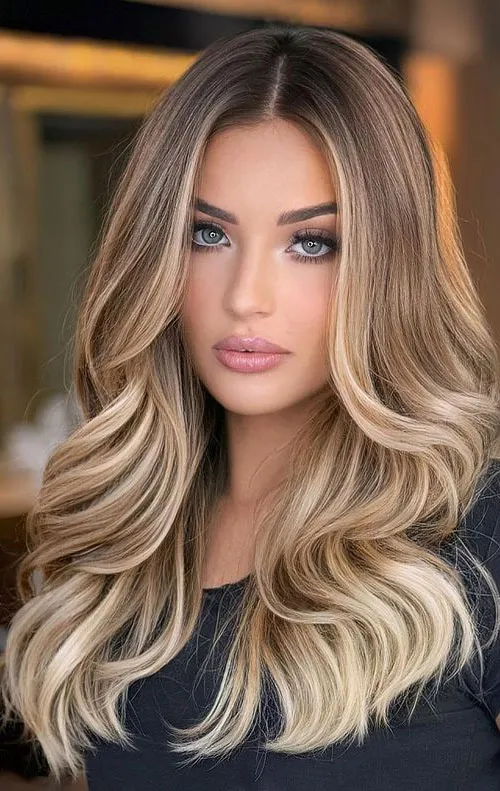
Up, Down, and In Between: A Haircut That Works in Every Version

Photo: Patrick Yakeu, CC BY-SA 4.0, via Wikimedia Commons
There is a moment after a salon appointment when you catch your reflection and think, yes, this is it. The shape sits right, the ends move, the color catches the light. Then Tuesday arrives. You have ten minutes, a conference call, and a dog who needs a walk. Your hair goes up. And that is where a good cut either earns its keep or quietly falls apart.
At Naomi & Company Hair Design, we think of a haircut as a signature look, not a single hairstyle. A signature should hold up in the versions you wear most, not just the one you leave the salon with.
The styles you actually wear are the real test
List them. Not the intricate braid you have been meaning to try, the ones you do on autopilot. A high ponytail for the gym? A low loop with a claw clip while you work? A braid on day three? A beanie on a cold morning? Maybe a half-up style for dinner. These are the shapes that share your week, and they put different demands on a cut than loose hair does.
A cut that looks great down can pull strangely when gathered. Layers pop out, the perimeter looks thin, face-framing pieces fall in the wrong place, or the nape feels bulky. None of that means the cut is bad. It means the cut was designed for one scenario. The fix is usually a small adjustment, not a whole new haircut.
Gather your accessories and do a three-updo test
Pick a quiet ten minutes, ideally with decent light and a mirror that lets you see the back. A hand mirror or phone camera works. Grab the accessories you use most: an elastic, a claw clip, maybe a headband or hat. Then try three versions.
- The high ponytail. Gather at the crown, not too tight. Look at the silhouette from the front and side. Does the shape still read intentional, or does it collapse into a cone? Are there short pieces at the temples that will not reach?
- The low gather. A low ponytail or loose loop at the nape. Check the sides. Does the hair pull flat against your head in a way you like, or does it expose a layer line that feels abrupt? Is the nape comfortable, or is there a heavy section that pulls?
- The clip or braid. A claw clip twist or a simple braid. This one reveals texture and weight. Do the ends tuck neatly, or do they spray out? Does the braid look balanced, or does one side feel thicker?
Take phone photos of each. You are not judging whether you look good, because you do. You are collecting data on how the cut behaves.
Read the shape, weight, and perimeter
When you look at the photos, focus on three things. Shape: does the gathered style keep a silhouette you recognize, or does it lose all the geometry of your cut? Weight: does pulling it back feel like you are fighting the hair, or does it gather easily? Perimeter: the outline of the cut, meaning the ends, the face-framing pieces, and the nape, should still make sense when hair is off your neck.
If the ponytail looks stringy at the ends, you may need a tiny trim or a change in layer placement, not more hair. If the sides look empty, face-framing pieces may be too short or too far forward. If the nape is heavy, the stylist can texturize or adjust the lower perimeter. These are design notes, not complaints.
Face-framing pieces and color placement deserve a second look
Pulled-back styles put face-framing pieces on display. Those pieces should be long enough to reach a ponytail if you want them to, or short enough to be clearly intentional if you do not. There is a middle zone, too short to gather and too long to stay put, that creates flyaways. Your stylist can adjust the length or angle so the pieces work with your routine instead of against it.
Color matters here too. A highlight placement that looks blended with hair down can look striped when hair is pulled back, especially at the crown or nape. If you wear updos often, mention it. A stylist can soften the placement or adjust the tone so it reads well in both directions. At Naomi & Company, we would rather hear about your gym ponytail before we formulate color than after.
The flyaway inventory
Flyaways are not automatically a flaw. Hair grows, and short pieces are part of having a cut. But pay attention to where they are. Temple flyaways after a high ponytail might mean the hairline area needs a different approach. Crown flyaways might be breakage or new growth. Nape flyaways might be friction from claw clips or hats.
At home, a little finishing cream or a soft-hold spray can smooth them without making hair stiff. At the salon, point them out. Your stylist can decide whether to adjust the cut, change your at-home routine, or simply reassure you that they are normal. Polished care is not about eliminating every wisp. It is about knowing which ones are part of the design and which ones are a signal.
Bring your notes to the next appointment
This is the part people skip. You do the audit, notice a few things, then forget by the time you are in the chair. Take a minute to write down three observations. For example: High ponytail leaves a gap at the temples. Claw clip makes the nape feel bulky. Face-framing pieces fall out of a low ponytail. That is useful information. It tells your stylist how you live in your hair.
We ask clients to bring photos of both down and up days, not just inspiration photos. A picture of your actual ponytail says more than a hundred saved images. It also keeps the conversation specific, which makes the next cut better. You do not need to diagnose the problem. You just need to show us what you see.
A signature cut should not play favorites
The goal is not a haircut that only works loose, or one that only works pulled back. It is a cut with enough thought behind it that both versions feel like you. That might mean slightly longer face-framing pieces, a softer perimeter, or a small shift in where layers start. None of those changes are dramatic. They are the quiet adjustments that make a signature look feel effortless, whether your hair is down for dinner or up for the third day in a row.
If you are not sure what your audit is telling you, bring it in. We will look at the photos, talk through your routine, and design the next cut around the life you actually have. That is what a signature look should do: show up for you, in every version.