Five Ways Your Next Haircut Can Pull Your Whole Wardrobe Together

Most of us build an outfit from the shoes up. We think about the blazer, the jeans, the necklace, the bag. Hair often gets treated like an afterthought—something to deal with after the clothes are on. At Naomi & Company Hair Design, we like to flip that idea. A good cut is the final layer of the outfit. It frames the collar, balances the shoulders, and decides how polished the whole thing reads before you even say good morning.
The trick is making sure your hair and your wardrobe are speaking the same language. That does not mean matching your hair color to your favorite sweater. It means choosing a shape, length, and tone that make getting dressed easier. Here are five ways to do it.
1. Bring Your Closet Into the Consultation
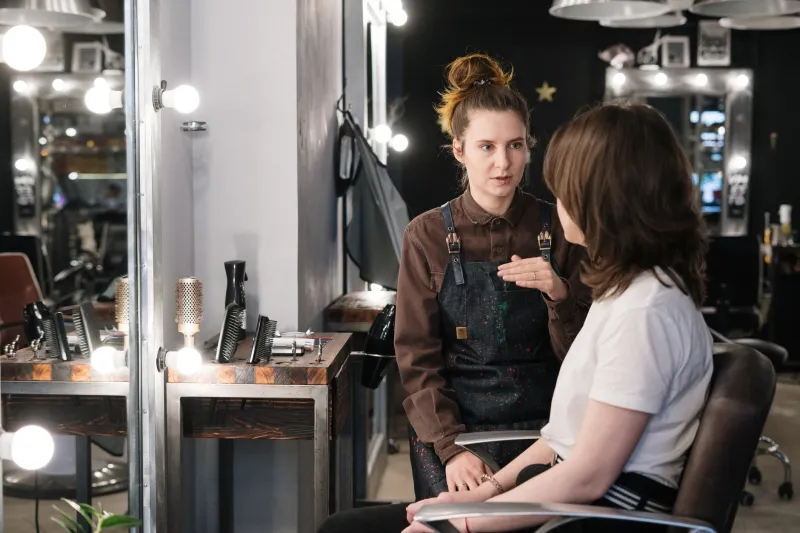
Hair consultations usually start with hair photos. That is useful, but it is only half the story. Bring pictures of outfits you actually wear—three is plenty. One work look, one weekend look, and one evening look if you have one. A tailored blazer, a favorite crewneck, a dress you reach for on repeat. Your stylist can look at the neckline, the collar, and the fabric and see how a cut will sit against them.
This is especially helpful if you are considering a big change. A chin-length bob looks one way with a turtleneck and another with an open collar. Face-framing pieces can soften a structured jacket or get in the way of glasses. When your stylist sees the clothes, the conversation gets more specific. You are not just choosing a haircut. You are choosing how it will behave in your real life.
2. Match the Shape to Your Real Week
We all have a fantasy version of ourselves who wakes up early, styles thoughtfully, and never hits snooze. The haircut should work for the actual version—the one who has twelve minutes and a travel mug. If your week is mostly office wear, a shape that holds a clean line with minimal fuss makes sense. If your weekends are jeans and a ponytail, the cut should still look intentional when it is pulled back.
That might mean a blunt collarbone-length cut that air-dries well, or a softer layered shape that looks fine with a quick rough-dry. It might mean keeping enough length to clip up on busy days without losing the silhouette. The goal is not a high-maintenance look that only works on salon day. The goal is a cut that makes your daily wardrobe feel more finished with less effort.
3. Treat Color Like a Wardrobe Neutral—or an Accent
Color is where hair and closet really start talking. If your wardrobe is mostly navy, cream, denim, gray, and black, a low-contrast color often looks the most polished. A glossy brunette, a soft lived-in blonde, or a rich single-process shade can act like a neutral. It lets your clothes lead. If you love bold accessories, bright lipstick, or statement jewelry, a slightly deeper or richer tone can hold its own without competing.
This is not about rules. It is about balance. A very bright hair color can be the focal point of every outfit, which is great if that is what you want. A softer tone can make your face and your clothes feel more connected. During your consultation, talk about the colors you wear most. Your stylist can help you choose a tone that flatters your skin and fits the palette hanging in your closet.
4. Let Necklines and Accessories Guide the Details
The details matter more than people expect. A collared shirt, a turtleneck, a scoop neck, and a halter all create different frames for your hair. If you live in button-downs, a length that clears the collar can look crisp. If you love chunky knits, face-framing pieces can keep the look from feeling heavy. If you wear glasses every day, your stylist can adjust the fringe or side pieces so they do not fight the frames.
Accessories count too. Earrings show up differently with a pixie than with a long bob. Hats change how bangs sit. Even a simple claw clip can be part of the plan if you ask for a shape that gathers well. Bring a few accessories to the appointment or mention them in the consult. Small adjustments often make the difference between a cut you like and a cut you wear constantly.
5. Build a Styling Map for the Season
A haircut is not a one-day event. It has to survive weather, growth, and the way your wardrobe shifts from summer to fall. Ask your stylist for a short styling map: what to do on wash day, what to do on day three, and which products actually earn their space on your shelf. If you are growing your hair out, ask how the shape will evolve over the next few months. If you are going shorter, ask what happens when it starts to gain weight at the ends.
This is also a good time to plan around your calendar. A cut right before a big work event may need a different approach than a cut at the start of a quiet month. Your stylist can time the shape and the upkeep so you are not fighting your hair during the weeks you need it to look its best.
Your wardrobe and your hair should not feel like two separate projects. When they work together, getting dressed gets simpler. You stop fighting the collar, the earrings, the weather, and the mirror. You just look like yourself, polished and put together.
If you are not sure where to start, bring three outfit photos to your next appointment at Naomi & Company Hair Design. We will look at the whole picture—not just the hair—and build a signature shape that works with the closet you actually wear.