Your Haircut Is Not a Hashtag: The Case for a Signature Shape
There is a particular kind of salon disappointment that happens after you get the cut you saw online. The photo was gorgeous. The stylist did exactly what you asked. And yet, two weeks later, you are standing in front of the bathroom mirror wondering why your hair feels like it belongs to someone else. That is not a failure of taste. It is a failure of translation.
Viral haircuts are built for a frame. They are built for a specific density, a specific growth pattern, a specific styling routine, and often a specific lighting setup. Your life is not a 30-second clip. Your hair has to survive meetings, workouts, humidity, dry shampoo, and the reality of how much time you are actually willing to spend on it. That is why a signature cut matters more than a trending one.
Why the Viral Cut Rarely Survives Real Life
A trend is a starting point, not a blueprint. The curtain bangs that look breezy on camera can become a daily styling commitment if your hair has a cowlick or a strong side part. The sharp bob that looks architectural on the runway can lose its edge the moment it grows a quarter inch. None of this means trends are bad. It means trends need a translator.
A signature cut is that translator. It is not a boring cut, and it is not a forever cut. It is a shape built around three things: your face and features, your hair texture and growth pattern, and your lifestyle. When those three are in agreement, your hair starts to look intentional even on the days you do almost nothing to it. That is the quiet power of a signature look.
At Naomi & Company Hair Design, we think of a signature cut the way a fashion person thinks of a personal uniform. It is not the same outfit every day. It is a set of proportions and silhouettes that reliably work, so you can experiment without starting from zero.
The Three Ingredients of a Signature Cut
First, face shape and features. This is not about following outdated rules about round faces or square jaws. It is about balance. Where does the hair want to fall? Do you want to draw attention to your eyes, your cheekbones, your neck? A good cut creates a frame, and a great cut creates a frame that feels like you.
Second, texture and density. Fine hair and thick hair do not behave the same way, even when they are cut the same length. Curly hair has shrinking and spring factor. Straight hair shows every line. A signature cut respects what your hair actually does, rather than forcing it into a shape that requires a team of hot tools to maintain.
Third, lifestyle. Be honest about your routine. If you have seven minutes in the morning, say so. If you work out five days a week, say so. If you hate the feeling of hair on your neck, say so. The best cut is the one that fits your real life, not the life you imagine you will have once you finally get organized.
How to Find Yours Without Overthinking It
Start with evidence. Look through photos of yourself from the past few years and notice when you felt best about your hair. Ignore the trends in the photos and focus on the shape. Was it the length? The way the front framed your face? The amount of volume around the crown? Write down three things that were working.
Then audit your routine. How often do you wash your hair? How often do you heat style it? Do you use products, or do you prefer a clean-and-go approach? Your signature cut should reduce friction, not add another chore to your list.
Finally, bring three photos to your stylist, not thirty. More images often create more confusion. Pick one photo for overall shape, one for the front or fringe, and one for the kind of finish you like. Be ready to say what you like about each one. That context is more useful than a saved folder of strangers.
How to Communicate It to Your Stylist
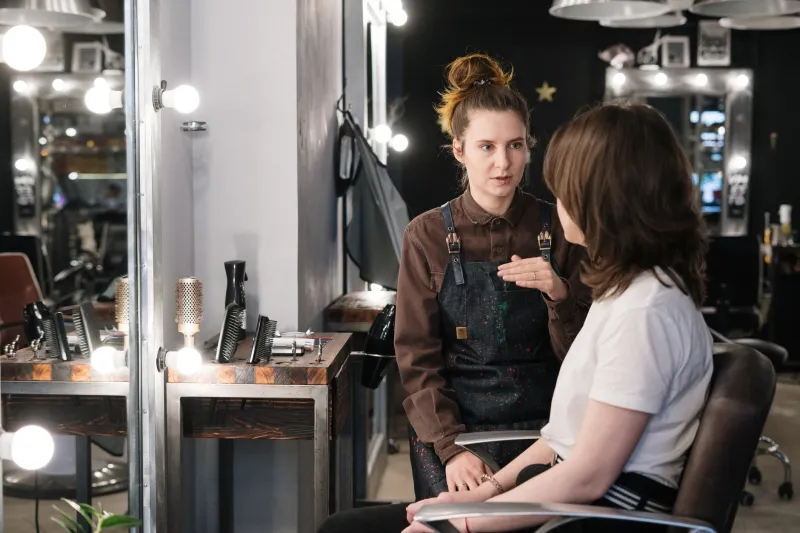
The most useful sentence in a salon is not 'do whatever you think.' It is 'here is what I love, here is what I hate, and here is how much time I have.' That gives your stylist permission to make professional choices without guessing.
Try speaking in specifics. Instead of 'I want layers,' say 'I want movement, but I do not want to lose weight at the ends.' Instead of 'I want bangs,' say 'I want a fringe that can be styled forward or pushed to the side, and I need it to work with my cowlick.' Ask about grow-out. A cut that looks incredible on day one but requires a salon visit every three weeks is not a signature cut for most people. It is a subscription.
Also ask what the cut will look like in eight weeks. That question alone can save you from a shape that only works in the chair. A signature cut should have a graceful in-between phase.
Timeless Shapes That Bend With 2026 Trends
A collarbone bob is one of the most adaptable shapes in the salon. It can be worn blunt for a clean, polished line, or softly layered for movement. In 2026, we are seeing it styled with deeper side parts and a smoother finish, but the underlying shape does not change.
Long layers are another workhorse. They can be cut to create a soft, face-framing effect without sacrificing length. The 2026 version feels less beachy and more refined, with a little more weight through the mids and a clean perimeter. A soft fringe can be added for a modern touch, but it should be cut to work with your natural part and growth pattern.
Short crops and pixies also benefit from the signature approach. The difference between a trendy crop and a signature crop is usually in the details: the shape of the sideburn, the weight at the crown, the way the fringe sits. Those details are what make the cut feel custom rather than copied.
The Polish Is in the Repetition
A signature cut is not about playing it safe. It is about creating a reliable foundation so that the fun parts of style, like color, texture, and accessories, have somewhere to land. When your base shape works, you can experiment with a gloss, a new styling cream, or a different part without feeling like you have to reinvent yourself.
That is the real luxury of a personal shape. It looks polished because it looks like yours. And that is a better compliment than any hashtag.